Old Testament vs. New Testament: What’s the Difference?
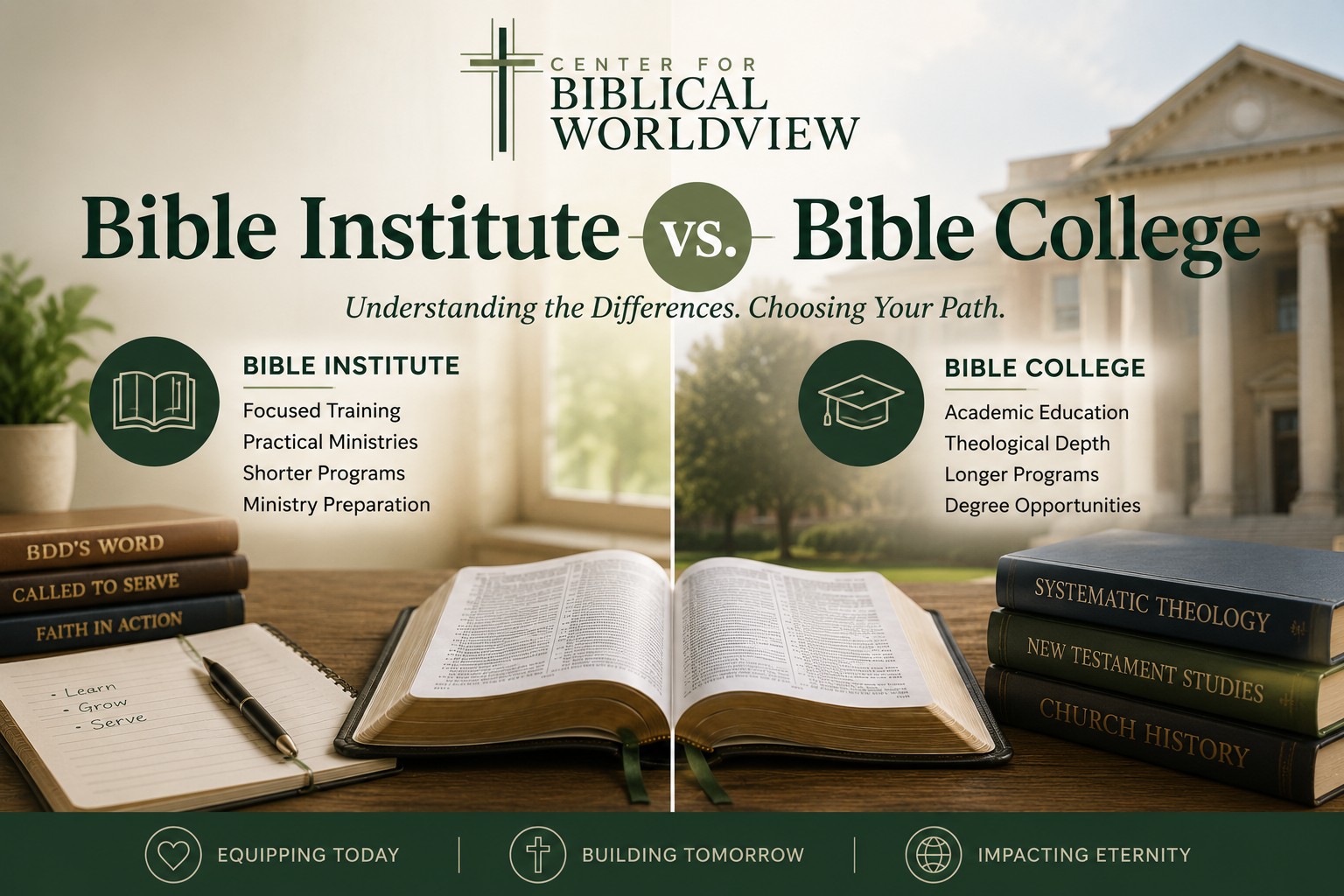
Bible Institute vs. Bible College: Which Is Right for You?
If you're looking to deepen your understanding of Scripture, prepare for ministry, or become a more effective Bible teacher, you've probably come across both
Bible institutes and
Bible colleges. While they share a common goal of equipping believers with biblical knowledge, they are designed for different audiences and learning objectives.
How Was the Bible Written?
The Bible was written under the inspiration of the Holy Spirit through human authors. Each writer brought his own personality, vocabulary, and historical perspective, yet God sovereignly guided the writing so that His message was communicated accurately.
Because Scripture was written over many centuries and in different cultural settings, understanding its historical background, literary style, and original audience helps us interpret it faithfully today.
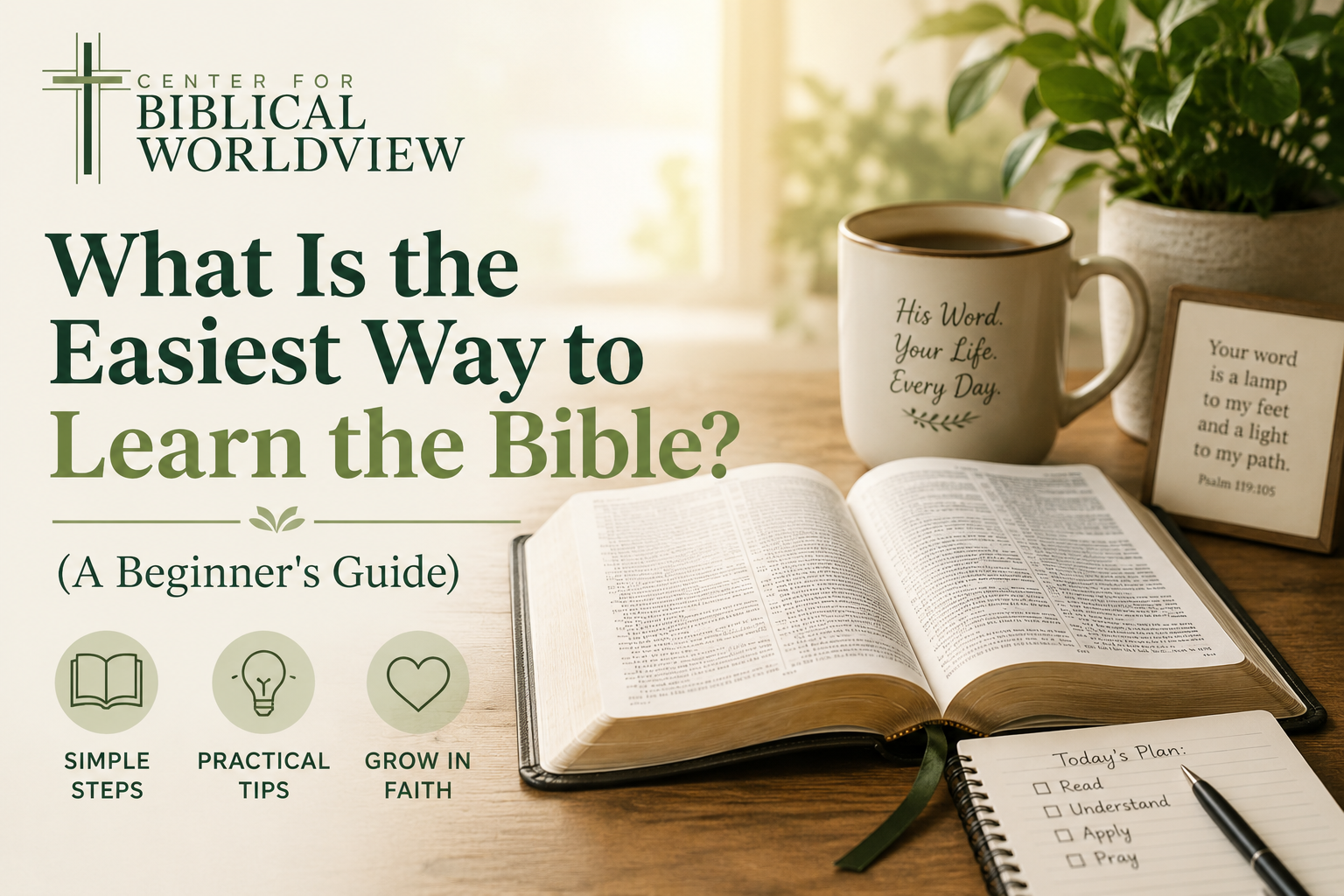
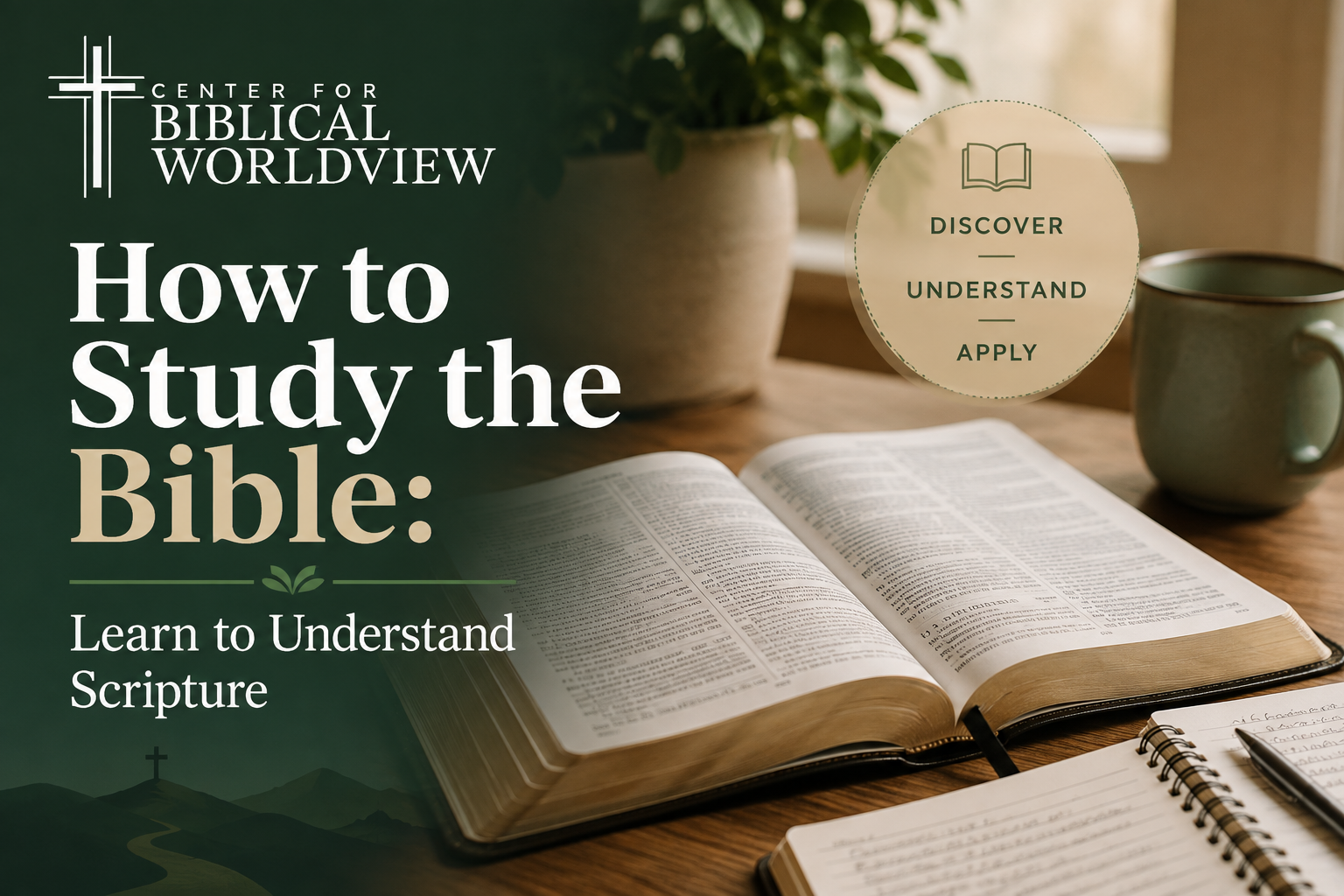
The Difference Between Reading and Studying the Bible
Reading the Bible and studying the Bible are both valuable, but they serve different purposes.
Reading helps you become familiar with Scripture and develop consistency.
Studying helps you understand what the passage actually means, why it was written, and how it applies to your life.
Bible study involves asking thoughtful questions, comparing passages, considering context, and carefully interpreting God's Word rather than simply reading through it quickly.
Helpful Tools for Bible Study
As you grow, several tools can make your study more effective:
- A quality study Bible
- Bible dictionaries
- Bible maps
- Concordances
- Original language resources
- Bible software
- Trusted commentaries
These resources provide historical background, explain difficult passages, and help connect themes throughout Scripture.
Take the Next Step in Understanding Scripture
Studying the Bible isn't reserved for pastors or theologians. Every believer is called to know God's Word, grow in spiritual maturity, and faithfully apply biblical truth.
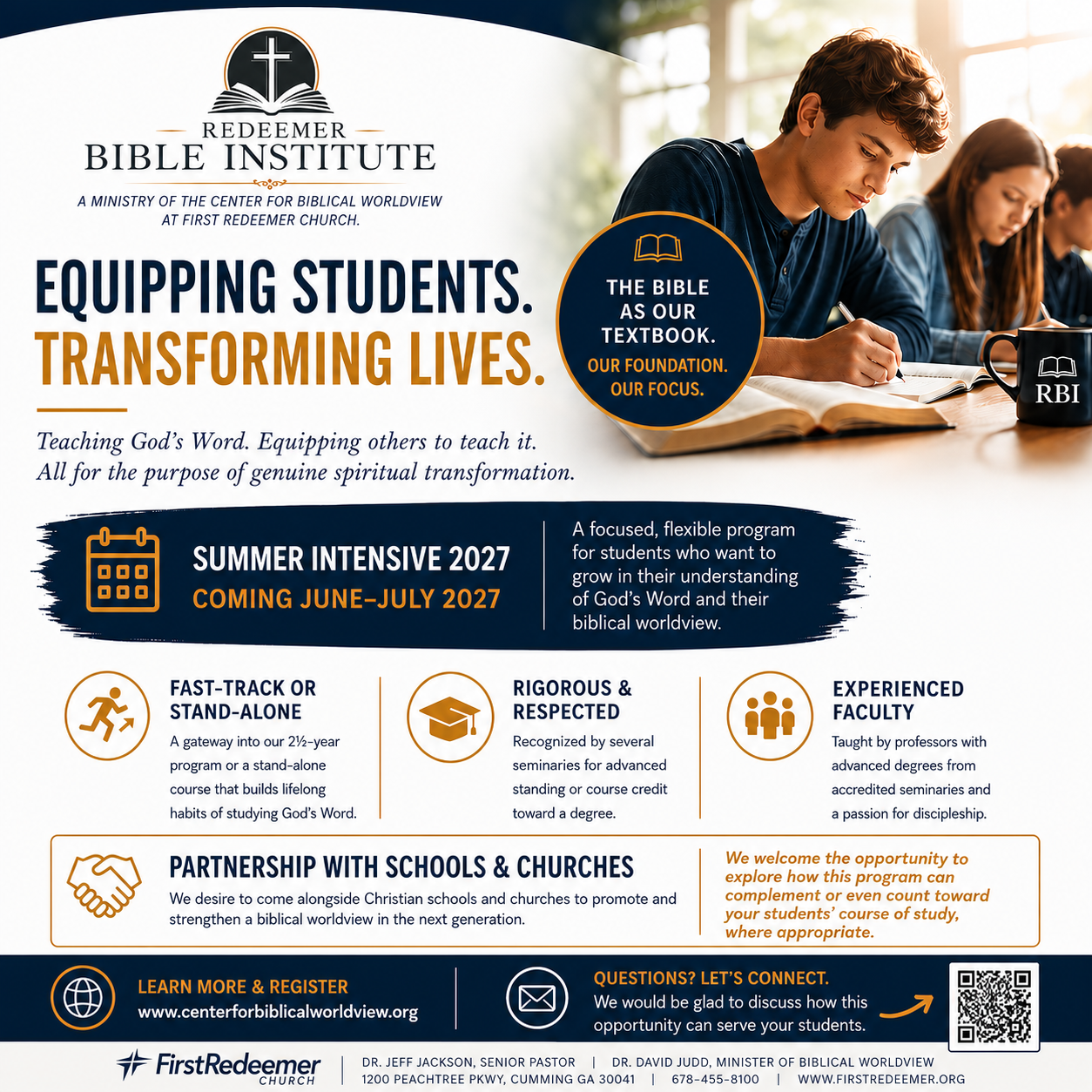
If you're ready to deepen your understanding of Scripture and gain confidence in studying and teaching the Bible, explore
the courses offered through the
Redeemer Bible Institute. You'll receive biblically grounded instruction, practical training, and a clear framework for interpreting God's Word with confidence.
Discover how the Redeemer Bible Institute can help you grow in biblical knowledge, strengthen your faith, and equip you for a lifetime of ministry.
Why Structured Bible Training Makes Learning Easier
Many Christians try to learn the Bible on their own, but having a clear roadmap makes the process much easier.
A structured Bible training program walks you through Scripture in a logical order, helping you build knowledge one step at a time.
Rather than jumping randomly between topics, you'll develop a comprehensive understanding of God's Word.
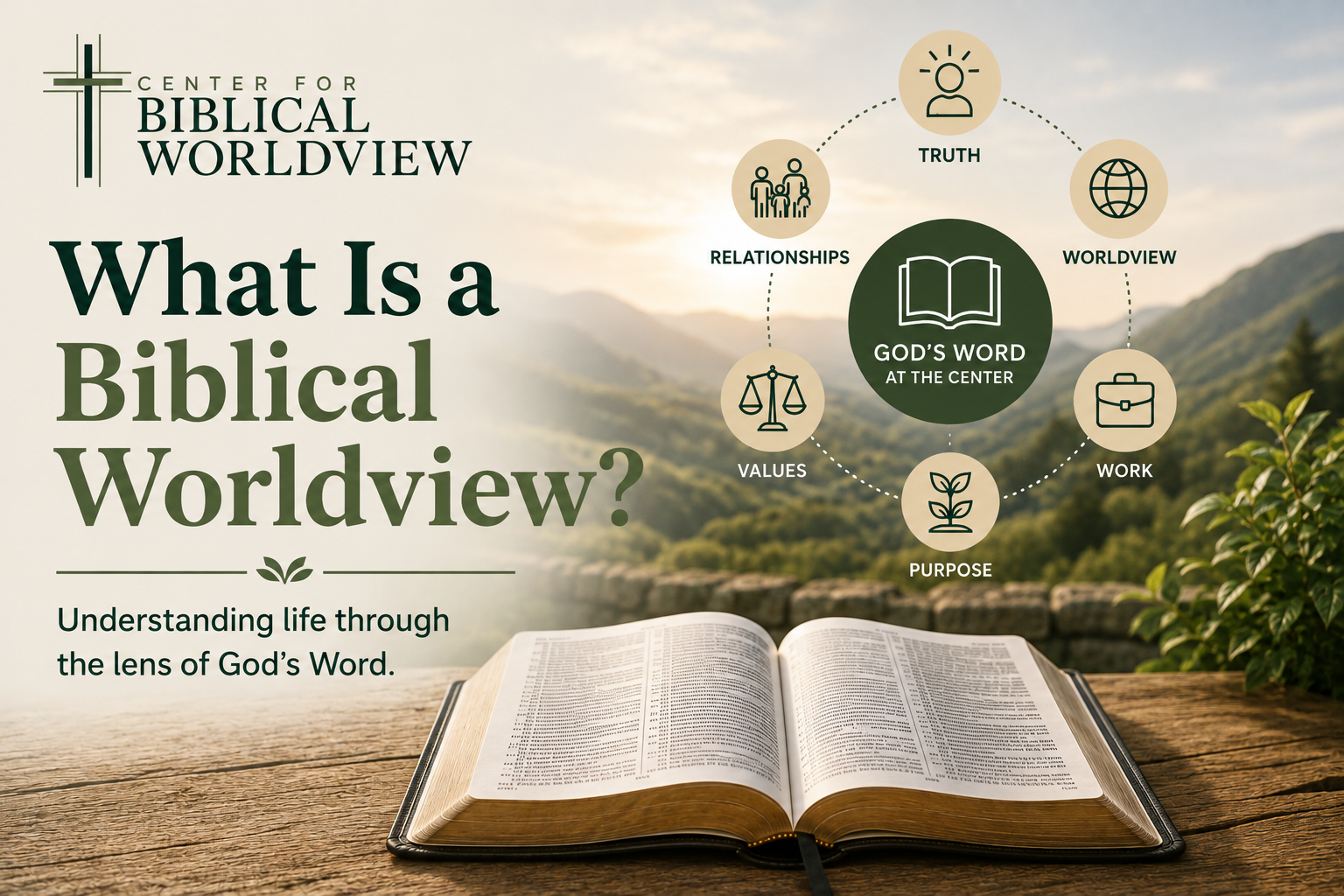
What Is a Biblical Worldview?
A biblical worldview is a framework for understanding reality based on the teachings of the Bible. Rather than asking, "What feels right?" or "What does culture say?" a believer with a biblical worldview asks,
"What does God's Word say?"
The Bible answers life's biggest questions:
- Who is God?
- Why were we created?
- What is truth?
- Why does evil exist?
- How should we live?
- What happens after death?
Instead of creating our own truth, a biblical worldview recognizes that God is the source of truth and that His Word provides the standard for faith, morality, and daily living.
As Christians grow in their understanding of Scripture, their worldview begins to reflect God's perspective rather than the world's.
How Churches Can Equip Members with a Biblical Worldview
Helping believers develop a biblical worldview is one of the Church's most important responsibilities.
Churches can strengthen their members by:
Prioritizing Biblical Teaching
Expository preaching and faithful Bible teaching help believers understand Scripture in context and apply it correctly.
Encouraging Systematic Bible Study
Studying the Bible book by book and learning core doctrines gives believers a stronger theological foundation.
Training Future Leaders
Churches need pastors, teachers, elders, and ministry leaders who understand Scripture and can faithfully communicate biblical truth.
Providing Discipleship Opportunities
Small groups, Bible studies, mentoring relationships, and structured training all help believers mature in their faith.
Addressing Today's Cultural Questions
Churches should equip believers to think biblically about current issues such as identity, marriage, family, ethics, technology, and culture by applying timeless biblical principles.
When churches intentionally develop biblical literacy, they prepare believers to stand firm in an increasingly secular world.
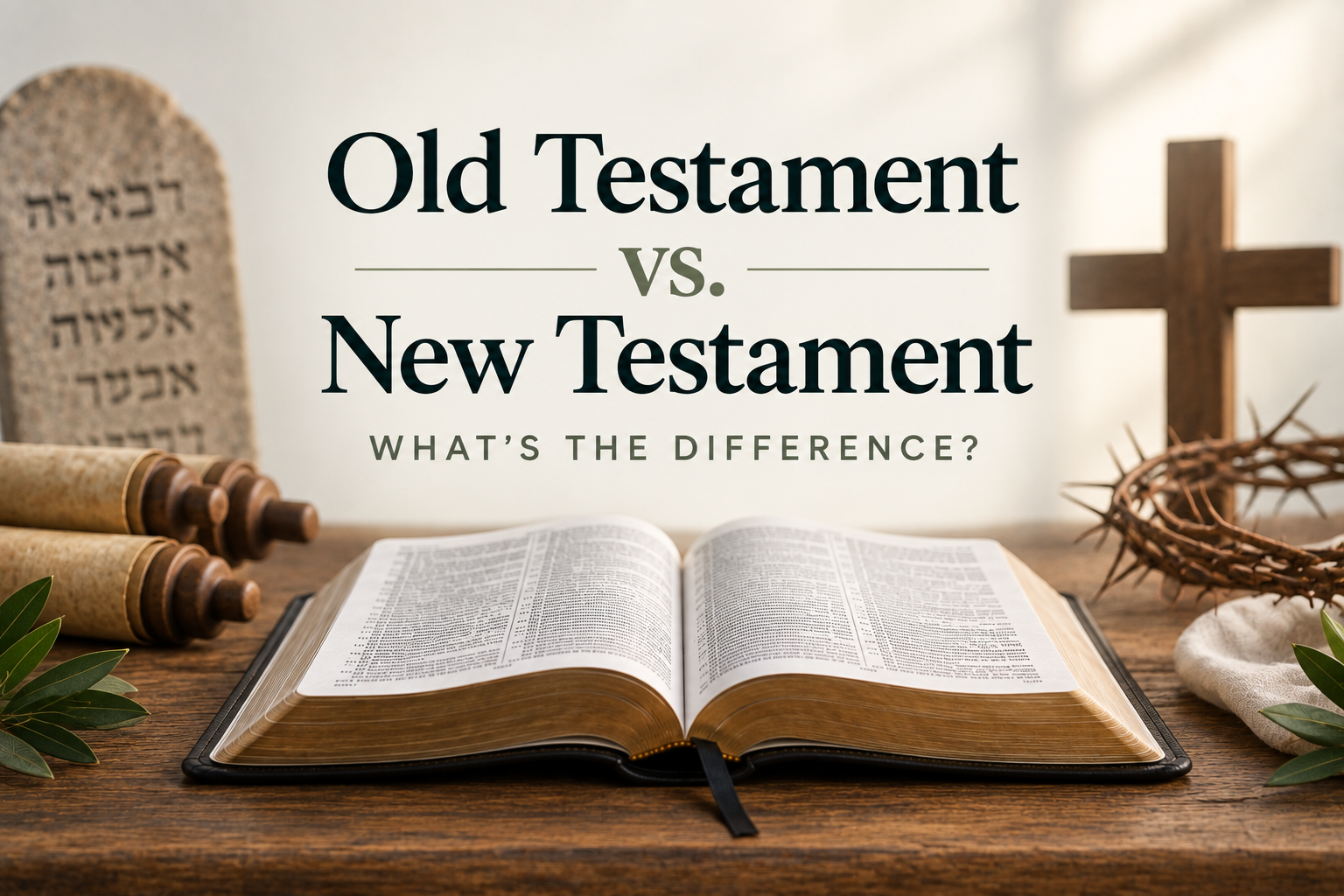
Old Testament vs. New Testament: What’s the Difference?
If you are new to reading the Bible, one of the first things you may notice is that it is divided into two major sections: the Old Testament and the New Testament.
But what is the difference between them? Why does the Bible need both? Did the New Testament replace the Old Testament? And do Christians still need to read the Old Testament today?
The Old and New Testaments are distinct, but they are not competing stories or two different versions of God. Together, they tell one unified story of God's relationship with humanity and His plan of redemption through Jesus Christ.
Understanding how these two parts of Scripture fit together can transform the way we read the Bible.
What Is the Old Testament?
The Old Testament is the first major section of the Christian Bible. It contains 39 books and begins with the creation of the world in Genesis.
It tells the story of God's creation, humanity's fall into sin, God's covenant promises, the nation of Israel, and God's unfolding plan to redeem His people.
The Old Testament includes several different types of biblical literature:
- The Law: Genesis through Deuteronomy
- History: Joshua through Esther
- Poetry and Wisdom: Job through Song of Solomon
- Major Prophets: Isaiah through Daniel
- Minor Prophets: Hosea through Malachi
Throughout these books, we learn about people such as Adam and Eve, Noah, Abraham, Sarah, Moses, Ruth, David, Solomon, Elijah, Daniel, and many others.
But the Old Testament is ultimately about much more than a collection of important biblical figures. It reveals who God is and prepares the way for the coming Messiah.
What Is the New Testament?
The New Testament contains 27 books and begins with the life and ministry of Jesus Christ.
Its four opening books—Matthew, Mark, Luke, and John—are known as the Gospels. They tell us about Jesus' birth, ministry, teachings, miracles, death, and resurrection.
The New Testament then continues with Acts, which records the growth of the early church, followed by letters written to churches and individual believers. It concludes with the book of Revelation.
At the heart of the New Testament is the fulfillment of something God had been revealing throughout the Old Testament: His plan of salvation through Jesus Christ.
Jesus said:
“Do not think that I have come to abolish the Law or the Prophets; I have not come to abolish them but to fulfill them.” — Matthew 5:17
The New Testament cannot be fully understood without the Old Testament because it continually builds upon what God had already revealed.
What Does “Testament” Mean?
The word testament is closely related to the idea of a covenant.
A covenant in Scripture is a binding relationship established by God. Throughout the Old Testament, God makes important covenants, including those associated with Noah, Abraham, Israel through Moses, and David.
One of the most important promises appears in Jeremiah:
“Behold, the days are coming, declares the LORD, when I will make a new covenant with the house of Israel and the house of Judah.” — Jeremiah 31:31
Hundreds of years later, Jesus spoke of this new covenant during the Last Supper:
“This cup that is poured out for you is the new covenant in my blood.” — Luke 22:20
The New Testament reveals how this promised new covenant was established through Jesus.
The Old Testament Anticipates Christ
One of the most important ways to understand the Old Testament is to recognize that it continually points forward.
Immediately after humanity's fall into sin, God gives the first glimpse of His plan for redemption (Genesis 3:15). From there, the story continues to unfold.
God promises Abraham:
“In you all the families of the earth shall be blessed.” — Genesis 12:3
Later, God promises that David's kingdom will be established forever (2 Samuel 7:12–16).
The prophets continue looking toward a coming Savior. Isaiah writes:
“For to us a child is born, to us a son is given; and the government shall be upon his shoulder.” — Isaiah 9:6
And Micah identifies Bethlehem as the place from which a ruler would come (Micah 5:2).
These promises do not tell separate stories. They progressively reveal God's plan.
The New Testament Reveals Christ
When we reach the New Testament, the promised Savior arrives.
Matthew begins his Gospel:
“The book of the genealogy of Jesus Christ, the son of David, the son of Abraham.” — Matthew 1:1
That opening sentence intentionally connects Jesus with the promises God made throughout the Old Testament.
Jesus is not introduced as an unexpected solution to a new problem. His coming is the fulfillment of a plan God had been revealing for generations.
Paul explains:
“But when the fullness of time had come, God sent forth his Son.” — Galatians 4:4
The Old Testament anticipates the Messiah.
The New Testament reveals Him.
Old Covenant vs. New Covenant
Christianity does not ultimately teach that believers escape their physical bodies and exist forever only as spirits.
Scripture promises a bodily resurrection.
Philippians 3:20–21 says:
“Our citizenship is in heaven, and from it we await a Savior, the Lord Jesus Christ, who will transform our lowly body to be like his glorious body.”
Our present bodies are mortal and temporary. The resurrection body will be transformed.
This is why Paul's teaching in 1 Corinthians 15 is so important. He writes:
“For this perishable body must put on the imperishable, and this mortal body must put on immortality.” — 1 Corinthians 15:53
The Christian's hope is therefore not based on preserving every physical part of our present body. Our hope rests in the power and promise of God.
Law and Grace: Is the Old Testament About Law and the New Testament About Grace?
It is sometimes said that the Old Testament is about law while the New Testament is about grace.
There is some truth behind the distinction, but it can also be misleading.
Grace is present throughout the Old Testament.
God showed grace to Adam and Eve after they sinned. He showed grace to Noah, Abraham, Israel, David, and countless others.
Likewise, God's moral standards do not disappear in the New Testament.
John writes:
“For this is the love of God, that we keep his commandments.” — 1 John 5:3
The Bible does not present an angry God in the Old Testament who suddenly becomes loving in the New Testament.
God's justice, holiness, mercy, love, and grace are revealed throughout all of Scripture.
Did Jesus Replace the Old Testament?
No.
Jesus fulfilled the Old Testament, but He did not declare it worthless.
Jesus regularly quoted from the Old Testament. When Satan tempted Him in the wilderness, Jesus responded repeatedly with Scripture from Deuteronomy (Matthew 4:1–11).
After His resurrection, Jesus even used the Old Testament to explain His own identity:
“And beginning with Moses and all the Prophets, he interpreted to them in all the Scriptures the things concerning himself.” — Luke 24:27
For Jesus, the Old Testament was authoritative Scripture—and it ultimately pointed toward God's redemptive plan.
Do Christians Have to Follow Old Testament Laws?
This question requires careful biblical interpretation because the Old Testament contains different kinds of laws given specifically to Israel under the Mosaic covenant.
Christians are not under the Mosaic covenant in the same way ancient Israel was. The New Testament makes this particularly clear regarding sacrifices, dietary restrictions, circumcision, and ceremonial requirements.
However, this does not mean the Old Testament has nothing to teach Christians about right and wrong.
God's moral character does not change.
For example, commands against murder, adultery, theft, dishonesty, and idolatry remain consistent with New Testament teaching.
Understanding which Old Testament commands apply directly to Christians requires reading them in their biblical context and understanding how they relate to Christ and the new covenant.
This is one reason learning
how to interpret Scripture correctly is so important.
Should Christians Read the Old Testament?
Absolutely.
Paul told Timothy:
“All Scripture is breathed out by God and profitable for teaching, for reproof, for correction, and for training in righteousness.” — 2 Timothy 3:16
When Paul wrote those words, the Old Testament Scriptures were central to the biblical writings Timothy had known from childhood.
The Old Testament helps us understand God's character, the seriousness of sin, the meaning of covenant, the need for redemption, and the significance of Jesus' life and ministry.
Without Genesis, we cannot fully understand why humanity needs redemption.
Without Exodus, we miss important biblical imagery of deliverance.
Without Leviticus, we lose much of the background for understanding sacrifice and atonement.
Without the Psalms, we miss some of Scripture's richest expressions of worship, suffering, repentance, and trust.
Without the prophets, we lose much of the anticipation surrounding the Messiah.
The Old Testament makes the New Testament richer, and the New Testament helps us see more clearly where the Old Testament story was leading.
Is the God of the Old Testament Different From the God of the New Testament?
No. The Bible reveals one God throughout both Testaments.
Some people perceive the Old Testament as primarily portraying God's judgment and the New Testament as portraying His love. But both God's justice and His mercy appear throughout Scripture.
The Old Testament declares:
“The LORD is merciful and gracious, slow to anger and abounding in steadfast love.” — Psalm 103:8
And the New Testament warns of God's judgment while also revealing His extraordinary grace.
God's character does not change.
“For I the LORD do not change.” — Malachi 3:6
The cross itself demonstrates both realities. God's holiness means sin cannot simply be ignored, while His love provides salvation through Christ.
What Is the Biggest Difference Between the Old and New Testaments?
Perhaps the simplest way to describe the difference is this:
The Old Testament looks forward to God's promised redemption. The New Testament reveals its fulfillment in Jesus Christ.
The Old Testament establishes the problem of sin, God's covenant promises, and humanity's need for a Savior.
The New Testament announces that the Savior has come.
John writes:
“For the law was given through Moses; grace and truth came through Jesus Christ.” — John 1:17
But these are not two disconnected messages.
They are chapters in
one story.
One Bible, One Story, One Savior
It can be tempting to approach the Bible as a collection of individual stories, rules, inspirational verses, and historical events.
But Scripture is much more than that.
From Genesis to Revelation, the Bible tells the story of creation, fall, redemption, and restoration.
God created a good world. Humanity rebelled against Him. Sin brought separation and death. God promised redemption. Jesus Christ came, died for sin, and rose from the dead. And Scripture looks forward to the day when Christ will make all things new.
Revelation gives us a glimpse of the conclusion:
“Behold, I am making all things new.” — Revelation 21:5
The Old Testament helps us understand why we need Jesus.
The New Testament shows us who Jesus is and what He has accomplished.
Together, they reveal God's truth and teach us how to understand our lives, our world, and our need for redemption.
That is why developing a biblical worldview requires learning from
the whole counsel of Scripture—not simply the parts we find easiest to understand.
Take the Next Step in Understanding Scripture
If you're ready to deepen your understanding of Scripture and grow in your ability to apply biblical truth to everyday life, explore the courses offered through the Redeemer Bible Institute. You'll receive biblically grounded instruction, practical training, and a clear framework for understanding God's Word and living faithfully according to its truth.
Discover how the Redeemer Bible Institute can help you grow in biblical knowledge, strengthen your faith, and equip you for a lifetime of ministry.
Frequently Asked Questions About the Old and New Testaments
How many books are in the Old and New Testaments?
The Protestant Bible contains 39 books in the Old Testament and 27 books in the New Testament, for a total of 66 books.
Which came first, the Old Testament or the New Testament?
The Old Testament came first. Its writings cover God's work from creation through the history of Israel and the prophets. The New Testament begins with the coming of Jesus Christ and records His ministry, the beginning of the church, and the teaching of the apostles.
Did the New Testament replace the Old Testament?
No. The New Testament fulfills and builds upon the Old Testament. Jesus Himself said He came not to abolish the Law and Prophets but to fulfill them (Matthew 5:17).
Why don't Christians follow all the Old Testament laws?
Many Old Testament laws were given to Israel as part of the Mosaic covenant. Jesus fulfilled the Law and established the new covenant. Christians therefore need to interpret Old Testament commands in light of Christ and New Testament teaching rather than simply assuming every command given to ancient Israel applies identically today.
Is the Old Testament still relevant for Christians?
Yes. The Old Testament reveals God's character, explains humanity's problem with sin, records God's covenant promises, provides wisdom for faithful living, and prepares us to understand Jesus and the gospel.
Where should a beginner start reading the Bible?
For someone completely new to Scripture, beginning with one of the Gospels—such as John or Luke—can provide a clear introduction to Jesus. From there, reading Genesis can help establish the biblical story's foundation. The goal should eventually be to understand the entire Bible as one unified story.
Is Jesus in the Old Testament?
Jesus' earthly ministry begins in the New Testament, but the Old Testament anticipates the Messiah through promises, prophecies, patterns, and themes that are ultimately fulfilled in Christ. Jesus Himself taught that the Old Testament Scriptures pointed to Him (Luke 24:27).
Recent Posts